Furano Property: Kitanomine Prices, Land Values and Seasons
A practical guide to Furano property for Australians as of October 2026: powder and lavender seasons, what you can buy in Kitanomine and town, price levels, and why land values keep climbing.
8 min read · Updated 15 October 2026
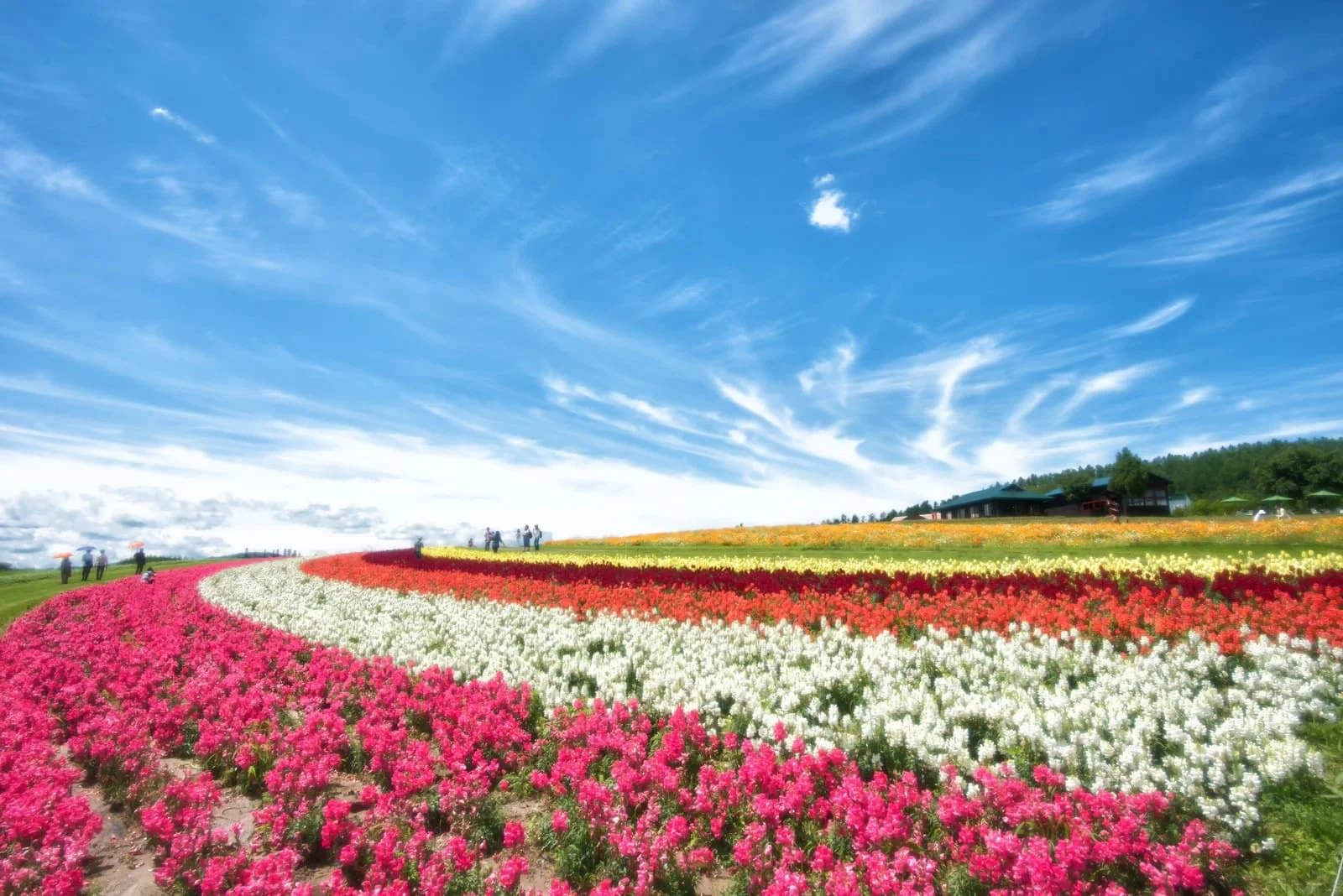
Furano property appeals to Australians who want Hokkaido powder without the crowds and prices of Niseko. Furano sits roughly in the middle of Hokkaido. It has a mid-sized ski resort on the edge of a small working town, and it gets a second busy season in summer when the lavender fields around it flower. As of October 2026, the ski-base district of Kitanomine is one of the fastest-rising land markets in Japan. This guide covers what the area is like, the types of property that come up, what they cost and what the official land price data actually says.
Two parts of Furano: Kitanomine and the town
When people talk about buying in Furano, they usually mean one of two places. Kitanomine is the ski-base village at the foot of the Kitanomine Zone of Furano Ski Resort. It has the gondola, the restaurants and bars, the ski rental shops, and most of the holiday apartments and newer villas. Furano town is a short drive away. It is where locals live, shop and send their kids to school. Property in town is generally plainer and cheaper, and in winter you will depend more on a car.
Prince Hotels, which runs the resort, says Furano Ski Resort is split into the Furano Zone and the Kitanomine Zone, joined by a shared trail at the top of the mountain. There are about 28 courses across the two zones. There is also an ungroomed Premium Zone that opens only when snow conditions allow. The peak is 1,074 metres and the vertical drop is 839 metres. The Kitanomine Gondola runs 2,958 metres up the mountain, and the longest run is 4,000 metres. In other words, this is a mid-sized resort with real terrain for intermediates and families, not a mega-resort.
For many buyers the appeal is the feel of the place. Furano is a farming town that also has a ski hill. It is not a resort built around foreign visitors. That means fewer English-language services than Niseko and quieter nights out. Some owners see that as the point, and others see it as a drawback. If you are still choosing between Hokkaido and the Japanese Alps, our comparison of Hakuba, Niseko and Furano sets the three side by side.
Summer: the lavender season
Furano's second season is summer. The official Hokkaido tourism site lists lavender viewing at Farm Tomita, the best known of the flower farms, as late June to early August, with different varieties flowering one after another. Farm Tomita is actually in the neighbouring town of Nakafurano, and a JR station called Lavender Field opens only in summer. Flower farms, cycling and hiking draw visitors across the whole Furano basin. So you can use or let a Furano holiday home in two distinct seasons, not only during the ski months.
This has practical effects for an owner. A property that sits empty from April to November costs just as much in property tax, insurance and maintenance as one that gets used. Two seasons of demand give you more weeks you might actually want to be there, and more flexibility if you plan to let the place out. That is not a promise of income. It is a real difference from ski towns that go quiet for most of the year.
Land prices in Kitanomine: what the official data shows
Kitanomine has been at or near the top of Japan's land price tables for several years, driven by more international visitors and resort development. The key figures come from different official surveys:
- Rosenka (roadside land values), released by the National Tax Agency on 1 July 2026: Furano's top-rising point, on the Kitanomine road, rose 28.0% year on year. That was the biggest increase in Hokkaido and the third biggest in Japan, behind Hakuba (32.7%) and Nozawa Onsen (31.3%). For comparison, the Hokkaido average rose 1.8% and the national average 2.9%.
- Rosenka, released July 2025: press reports at the time put the Kitanomine point up 30.2% to ¥82,000 per square metre (about AU$742). Press reports in 2025 also said foreign visitors stayed about 313,000 nights in Furano in fiscal 2024, a record high and roughly 2.8 times the level of a decade earlier.
- Chika chosa (the prefectural benchmark land price survey), valued at 1 July 2026 and reported in September 2026: a residential point in Kitanomine recorded the highest rate of increase in Japan for the second year in a row.
Japan has three main official land price measures, and they are easy to confuse. Rosenka is set by the National Tax Agency for inheritance and gift tax. It is valued at 1 January and published each July. Koji chika (the official land price announcement) comes from the Ministry of Land, Infrastructure, Transport and Tourism. It is also valued at 1 January and is published in March. Chika chosa (the benchmark land price survey) is run by the prefectures, valued at 1 July and published in September. All three track particular sites, not the price of any individual property.
Keep two things in mind. First, these rises start from a low base. A roadside value of ¥82,000 per square metre is still a small fraction of land values in central Sapporo or Tokyo, which is partly why the percentages look so large. Second, past increases tell you about the last few years, not the next few. Ask any agent to show you recent sale evidence for the specific street, not just the headline survey figures.
Property types and price levels
Property in and around Furano falls into a few broad groups:
- Older ski apartments and condominium units in Kitanomine. These are usually the cheapest way in, and many are within walking distance of the gondola. Check the building's management fees, its repair reserve fund, and how it deals with snow and heating.
- Newer chalets, villas and townhouses in Kitanomine. These are built for holiday use and short-term letting. They typically have drying rooms, larger living areas, and parking that has to be cleared of snow.
- Vacant residential lots. Land in Kitanomine has risen faster than anything else, but building in Hokkaido is expensive and winter limits when you can build. Budget for both the land and the build.
- Detached houses in Furano town and the wider basin. These generally cost less per square metre. They suit buyers who want a base for both summer and winter more than a ski-in, ski-out letting property.
Farmland is a separate category. Agricultural land is governed by the nochi-ho (Agricultural Land Act), and a sale usually needs approval from the local agricultural committee. Buyers who will not farm the land generally find that hard to get. If a rural block looks unusually cheap, check its land category before anything else.
As a reference point, JPRESORT's current listings of houses in Hokkaido (Niseko and Furano combined, as at 13 October 2026) are 4 properties with a median asking price of ¥102,500,000 (about AU$928,000). They range from ¥90,000,000 (about AU$815,000) to ¥330,000,000 (about AU$2.99 million), with an average land area of 367 square metres and an average floor area of 156 square metres. That is a small sample covering two different markets. Treat it as a rough guide to where detached resort houses sit, not as a Furano price index. AUD figures use ¥110.491 per AUD and are approximate.
The asking price is only part of the cost. Purchase taxes, registration, agent fees and annual property tax all add up, and our guide to what it really costs to buy in Japan works through them. Before any contract, a licensed agent must give you the juyo jiko setsumei (the important matters explanation). It covers zoning, building restrictions and rights over the land. For a resort property, read it closely for road access, snow-load and setback issues.
Letting it out when you are not there
Many Australian owners plan to let their Furano place out while they are at home. Under the Private Lodging Business Act (the minpaku law), you can offer a home for paid stays for up to 180 days a year once you have lodged a notification. If the owner does not live on site, the law provides for a registered management company to run the letting. Local governments can limit when and where minpaku operates. Letting for more than 180 days needs a hotel or inn licence under the Hotel Business Act, which has stricter building and fire requirements. Before you buy, check which of these a property is set up for, because it shapes what you can do with it.
Foreigners, including Australians, can buy property in Japan freehold. Our explainer on whether Australians can buy property in Japan covers the reporting rules and the practical steps. Owning from 8,000 km away covers management, snow clearing and keeping a house in good condition through a Hokkaido winter.
Who Furano suits
Furano tends to suit buyers who want reliable Hokkaido snow in a real town, value summer as much as winter, and are happy with fewer English-language services than Niseko. It works well for families and intermediate skiers. It suits you less if you want a large international resort scene or the shortest possible transfer from New Chitose Airport; Asahikawa Airport is the closer airport for Furano. If you want somewhere you can reach from Tokyo for a weekend, look at Karuizawa or the Nagano Highlands instead.
What to do next
If Furano is on your shortlist, start by looking at what is actually for sale. Browse our Hokkaido listings, with prices converted to AUD daily, to see what your budget buys in Furano compared with Niseko. If a particular property catches your eye, send an enquiry and we can tell you about its zoning, letting status and running costs. If you are at an earlier stage and want to talk through areas, budget and how buying from Australia works, book a free call.
Frequently asked questions
+Can Australians buy property in Furano?
Yes. Japan does not stop foreigners from owning residential land or buildings, so Australians can buy freehold in Furano just as in the rest of Japan. You do not need to live in Japan to buy. In practice the main exception is farmland, because a sale generally needs approval from the local agricultural committee.
+Is Furano property cheaper than Niseko?
Generally yes, especially for land and houses in town, but Kitanomine has been rising fast. Official roadside land values in Kitanomine rose 30.2% in 2025, and the Kitanomine road rose another 28.0% in 2026. Compare specific listings rather than relying on averages, because distance from the gondola makes a big difference.
+When is lavender season in Furano?
The official Hokkaido tourism site lists lavender viewing at Farm Tomita as late June to early August. The farm is in neighbouring Nakafurano, and a JR station called Lavender Field opens only in summer. Check the farm's own information before you plan a trip, because bloom timing depends on the weather.
+Can I rent out my Furano holiday home when I'm not using it?
Possibly, depending on how the property is set up. Under the minpaku law, you can let a home for up to 180 days a year once you have lodged a notification, and an owner who lives elsewhere needs a registered management company. Letting for more than 180 days needs a hotel or inn licence, and local rules can add restrictions.
+Why have Kitanomine land prices risen so much?
The main drivers have been more international visitors and resort development around the ski area. Press reports in 2025 said foreign visitors stayed about 313,000 nights in Furano in fiscal 2024, a record high, and later reports put this at about 2.8 times the level of a decade earlier. The rises start from a fairly low base, and past increases do not guarantee future ones.
Looking in Hokkaido? Tell us what you need
We search beyond our listings, including properties that are not advertised. Or book a 15–30 minute video call in English, at an Australian-friendly time. No obligation.
Sources
- Nippon.com Japan Data: 2026 roadside land prices (National Tax Agency release, 1 July 2026)
- Nikkei: Rosenka 2026 - Hokkaido rosenka up 1.8 percent, led by Furano and Otaru
- News On Japan: Furano tops Hokkaido roadside land price growth (July 2025)
- Hokkaido Shimbun: Furano foreign visitor stays reach record (2025)
- Gendai Media: Furano foreign visitor growth
- Hokkaido Construction News (e-kensin): Benchmark land prices 2026, northern Hokkaido and Sorachi
- Visit Hokkaido (official): Farm Tomita
- Prince Hotels: Furano Ski Resort
- Prince Hotels: Shin Furano Prince Hotel - Furano Ski Area
- LIVE JAPAN: Furano Ski Resort guide
- Japan Tourism Agency (MLIT): Minpaku system overview
This article is general information, not legal, tax or financial advice. Obtain your own advice from qualified professionals in Japan and Australia before acting on it.
Property for sale in Hokkaido — Niseko & Furano
See all →Niseko, Hokkaido
Niseko & Kutchan, Hokkaido · House
Niseko, Hokkaido
Niseko & Kutchan, Hokkaido · House
Niseko, Hokkaido
Niseko & Kutchan, Hokkaido · House


