Niseko vs Hakuba Property: A Buyer's Comparison for Australians
Niseko or Hakuba? A buyer's comparison for Australians, as of October 2026: flights, land prices, rental rules, accommodation taxes, resale depth and the paperwork foreign owners now face.
8 min read · Updated 27 October 2026
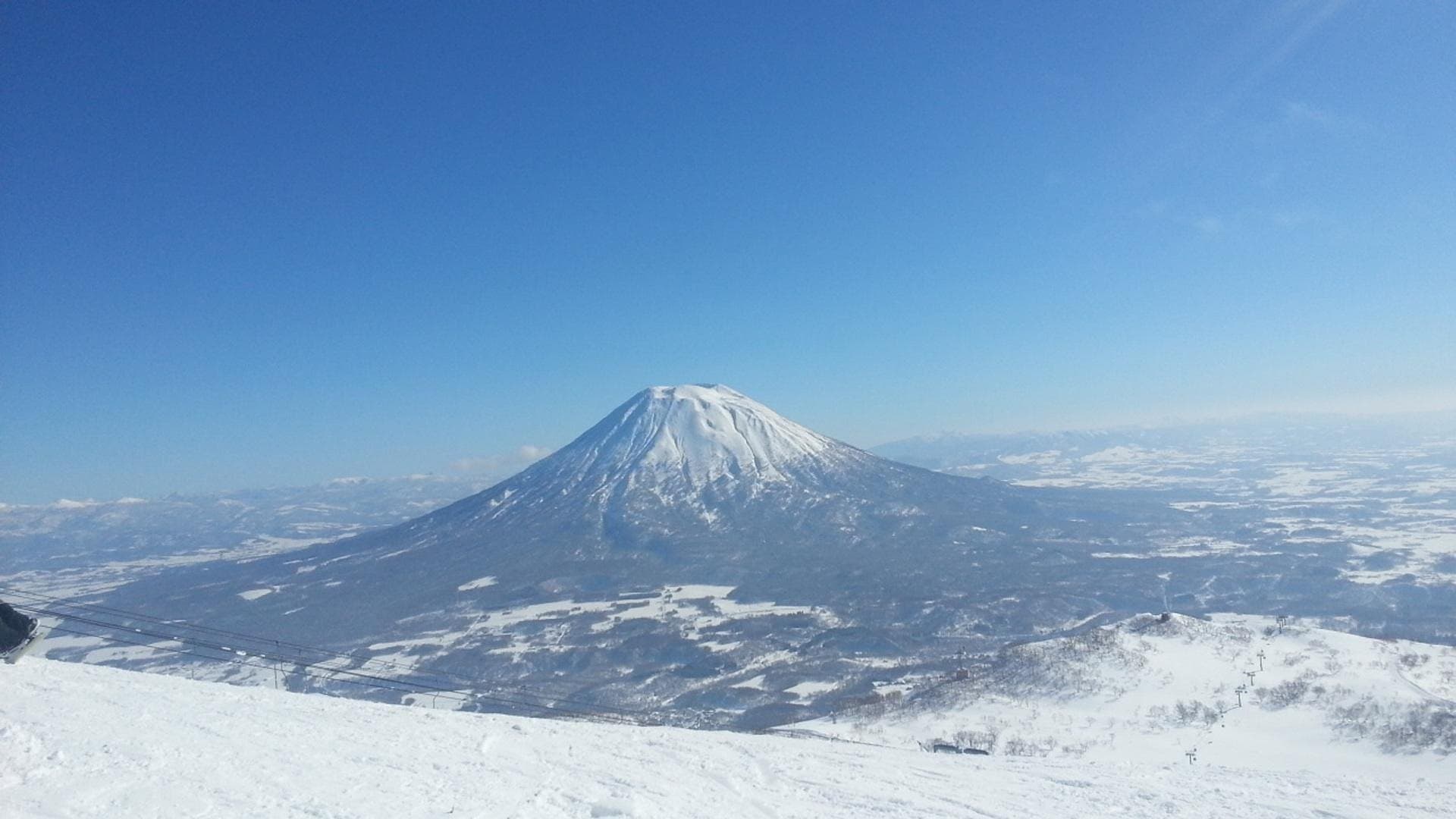
If you are weighing up Niseko vs Hakuba property, you are choosing between Japan's two best-known ski markets for Australians. They are very different places to own. Niseko, in Hokkaido, is an established international resort with high land prices and a deep pool of foreign buyers. Hakuba, in Nagano, is cheaper per square metre and currently has the fastest-rising land prices in Japan, but its resale market is smaller. This guide compares the two as of October 2026, for someone who plans to sign a contract, not just book a ski trip.
Our earlier overview, Hakuba, Niseko and Furano compared, covers lifestyle and what the resorts feel like. This article sticks to buying: access, price levels, land price trends, rental rules, taxes on guests, liquidity and the paperwork. Yen figures are converted at about ¥110.491 per AUD, so the AUD amounts are approximate.
Getting there from Australia
Niseko has the simpler trip in winter. Qantas's published 2026/27 schedule runs non-stop from Sydney to Sapporo New Chitose from 7 December 2026 to 31 March 2027. Flights start at three a week and rise to as many as five a week from mid-December through January. Schedules can change, so check with Qantas before you plan around them. From New Chitose, a rental car takes roughly 2 hours 10 minutes in good conditions. The train-and-bus route through Sapporo, Otaru and Kutchan takes about 3 hours, and a resort bus can take up to 4 hours. Winter roads often slow every option.
Hakuba has no nearby international airport. You fly into Tokyo, either Haneda or Narita (Narita usually adds about an hour), then take the Hokuriku Shinkansen to Nagano and an express bus to Hakuba. From Tokyo that is usually 3 to 4 hours. In return, you get year-round flight choice into Tokyo from most Australian capitals, and a property that is easy to reach outside the ski season. For an owner who visits in spring or autumn, that matters more than the winter-only direct flight to Sapporo.
Snow and seasons
Both areas get heavy, reliable snowfall in a normal winter, and you will not go wrong on snow alone. The practical differences are elsewhere. Niseko's market is built around one mountain and a short, intense peak season, so most of its rental income comes from December to March. Hakuba Valley takes in several separate ski areas, and the Northern Alps setting draws hikers and cyclists in the green season. That gives Hakuba owners a slightly better chance of summer bookings, though winter still carries both markets. If you want to use the place yourself in July, Hakuba is the more natural fit.
Price levels: the gap is large
Official land prices show how far apart the two markets are. In the Ministry of Land, Infrastructure, Transport and Tourism (MLIT) chika koji (official land price survey, valued at 1 January 2026), Hakuba's leading residential benchmark point was ¥27,400 per m² (about AU$248). Its top commercial point was ¥40,300 per m² (about AU$365). In Kutchan, the town that contains Niseko Hirafu, MLIT survey points compiled by the aggregator tochidai.info put the 2026 town average at about ¥120,750 per m² (about AU$1,093). The single Hirafu residential point is around ¥200,000 per m² (about AU$1,810).
Benchmark points are only a guide to market prices, but the gap shows up in real listings too. In Niseko, most of the money goes on location and land, and many buyers end up in a managed condominium rather than a house. In Hakuba, the same budget usually buys a freestanding house on a decent block. The listings for sale in October 2026 for the Nagano Highlands (Hakuba plus Tateshina and Yatsugatake) ran from modest older houses to large new chalets, often on generous blocks of land, so there was stock at both ends. The quieter Tateshina and Yatsugatake areas pull typical prices down; expect Hakuba houses near the lifts to cost more.
Land price trends: Hakuba is leading Japan
Hakuba has topped the national tables two surveys running. In the January 2026 chika koji, MLIT ranked the Hakuba-1 residential point first in Japan for residential growth, up 33.0% year on year (29.6% the year before). The Hakuba 5-1 commercial point rose 35.2%, third nationally. In the todofuken chika chosa (the prefectural land price survey, valued at 1 July 2026 and published on 16 September 2026), a different Hakuba residential point rose 31.3% to ¥17,600 per m², second in Japan. The Hakuba 5-1 commercial point rose 35.6% to ¥32,000 per m², first in Japan. MLIT put the rises down to tourism demand from domestic and international visitors, including demand for resort homes and condominiums.
Kutchan is still rising, but more slowly from a much higher base. Tochidai.info's compilation of the MLIT points shows Kutchan's average up about 12% in the January survey and about 10% in the July survey. In the September release, MLIT named Chitose, not Kutchan, as Hokkaido's fastest-rising area. For a buyer, this means Hakuba has more momentum but carries more risk if growth cools, while Niseko is a more mature market where most of the repricing has already happened. Past growth does not predict future returns in either place.
Benchmark points are individual parcels chosen by the government valuers. A 33% rise at one point does not mean every Hakuba property gained 33%. Use the surveys to read direction and price level, not to value a specific house.
Rental market and the rules that govern it
Most buyers in either resort want to rent the place out when they are not using it. How you are licensed decides how much you can earn. Under the Private Lodging Business Act, a minpaku (registered private lodging) can operate for a maximum of 180 nights a year. The operator must notify the prefectural governor, and an owner who does not live on site must appoint a registered private lodging administrator. Local councils can restrict operations further by ordinance. To rent more than 180 nights, a property generally needs a ryokan gyo kyoka (an inn business licence under the Hotel Business Act), which brings fire and building requirements. Before you sign, ask which licence the property holds or could get. In ski towns, this matters more than the purchase price.
Niseko has a well-developed industry of property managers, booking platforms and condominium management companies that are used to foreign owners. Hakuba's management sector is growing but smaller, and many houses there are let through local operators or managed more directly by owners. Our guide to owning from 8,000 km away covers how to set up management from Australia.
New accommodation taxes on your guests
Both prefectures introduced accommodation taxes in 2026, and minpaku stays are covered. Hokkaido's prefectural tax began on 1 April 2026, and towns can add their own. Kutchan's town accommodation tax was 2% of the room charge for stays up to 31 March 2026. From 1 April 2026, the town also collects Hokkaido's tax on the prefecture's behalf, charging the two together as a single combined town-and-prefecture accommodation tax. The total is 3% of the room charge: the Hokkaido portion is included in that 3% rather than added on top, and the town's share is whatever remains after the Hokkaido tax is deducted. Nagano's prefectural tax began on 1 June 2026. The standard rate is ¥200 per person per night for the first three years (1 June 2026 to 31 May 2029), rising to ¥300 from 1 June 2029, and it applies only where the room-only, pre-tax rate is ¥6,000 or more per person per night; stays below that are not taxed. Hakuba is one of five Nagano municipalities with its own tax, alongside Matsumoto, Karuizawa, Achi and Nozawa Onsen, so rates in those areas differ from the standard rate. In those areas the prefectural portion is only ¥100 for the first three years (rising to ¥150 after that), and the municipality's own accommodation tax is charged on top, so in Hakuba guests pay the prefectural portion plus Hakuba's village tax. The village publishes its rates. Guests pay these taxes, but the accommodation operator collects them from guests and files and remits them. In Kutchan, for example, the operator collects an amount equal to 3% of the room charge from guests and files and pays it to the town's tax division, which works out the Hokkaido portion and passes it on to the prefecture. For a minpaku, that operator is you as the registered owner-operator, although your manager can handle it for you. The taxes also add to the nightly price you have to compete on.
Liquidity: who buys it back from you?
Resale depth is where Niseko's higher price buys you something. It has a long track record of international buyers and a large stock of condominiums and chalets marketed overseas. When you sell, you are selling into a known market. Hakuba's foreign buyer pool has grown quickly, but there are fewer comparable sales, more one-off houses on large blocks, and more reliance on domestic buyers. A cheaper Hakuba house may take longer to sell, and a large rural block appeals to fewer people. Neither market is as liquid as an Australian capital-city apartment, so plan to hold for the medium term in either place.
Rules that apply to both
- Foreigners, including Australians living in Australia, can buy freehold land and buildings in Japan in their own name. See can Australians buy property in Japan.
- Under the Foreign Exchange and Foreign Trade Act, a non-resident who acquires Japanese real estate must file a report with the Minister of Finance through the Bank of Japan within 20 days. It must be written in Japanese, and an agent in Japan can file it for you. The exemptions changed for acquisitions from 1 April 2026, so assume a holiday home now needs a report and confirm this with your shiho shoshi (judicial scrivener).
- Since 5 October 2026, an individual newly registered as an owner (for example, through a transfer of ownership) must declare their nationality when the registration is filed. It is held in a separate Legal Affairs Bureau file used for searching owner details, not shown alongside the owner's name on the register.
- In Hokkaido, some land near public water sources sits in designated water resource conservation areas, where land deals require prior notification to the prefecture. Ask your agent to check whether a Niseko-area lot is affected.
- Before you sign, your agent must give you the juyo jiko setsumei (the important matters explanation). Read it carefully, especially zoning, road access, water and sewerage.
Purchase costs, annual property tax and management fees apply in both places. See what it really costs for the full list, and how Australians pay for it for transfers and financing.
Which one suits you?
- Choose Niseko if you want winter direct flights, a deep international resale market and professional condo management, and you can pay much more per square metre.
- Choose Hakuba if you want more land and floor space for your money, year-round use and access through Tokyo, and you accept a thinner resale market after a period of very fast price growth.
- Either way, check the rental licence, management arrangements and access to the property in snow before you look at the view.
Price is not the only infrastructure question. The Hokkaido Shinkansen extension to Sapporo, which will stop at Kutchan, was pushed back in 2025 to the end of fiscal 2038 because of tunnelling problems. Do not pay a premium today for a train that is more than a decade away.
Your next step on JPRESORT
If Hakuba's mix of land and price appeals, start with our Nagano Highlands listings. Prices update daily in AUD, so you can see what a real budget buys around Hakuba and the quieter valleys nearby. If you lean towards Niseko, browse the Hokkaido area page. If you have a shortlist and questions about licences, rental history or the reporting paperwork, book a free call with LIFESEEDS, the licensed Tokyo agency behind JPRESORT. We can walk you through a specific property before you commit to an inspection trip.
Frequently asked questions
+Is Niseko or Hakuba property cheaper?
Hakuba is much cheaper per square metre. MLIT's 2026 survey puts Hakuba's top residential benchmark at ¥27,400 per m² (about AU$248). Kutchan points near Hirafu are around ¥200,000 per m² (about AU$1,810). Hakuba buyers usually get a house and land for what a Niseko condominium costs.
+Which has stronger capital growth, Niseko or Hakuba?
In 2026, Hakuba recorded the fastest benchmark land price rises in Japan, above 30% at its leading points in both the January and July surveys. Kutchan rose by around 10–12% from a much higher base. Strong past growth also means more risk if demand cools, so do not assume it will continue.
+Can I rent out my Niseko or Hakuba property all year?
Only with the right licence. A minpaku registration caps letting at 180 nights a year, and local rules can restrict it further. Renting beyond that generally requires a ryokan gyo (inn business) licence. Check which licence a property holds before you buy.
+Do Australians need to report a Japanese holiday home purchase?
Generally yes. Non-residents must report real estate acquisitions to the Minister of Finance through the Bank of Japan within 20 days, in Japanese. The exemptions changed for purchases from 1 April 2026, so ask your judicial scrivener or agent to confirm and file it for you.
+How do I get to Hakuba and Niseko from Australia?
For Niseko, Qantas flies non-stop from Sydney to Sapporo in winter, then it is about 2–4 hours by car or bus. For Hakuba, you fly to Tokyo, then take the shinkansen to Nagano and a bus, which is usually 3–4 hours from Tokyo.
Tell us what you're looking for and we'll find matching properties
We search beyond our listings, including properties that are not advertised. Or book a 15–30 minute video call in English, at an Australian-friendly time. No obligation.
Sources
- MLIT: 2026 Official Land Price (chika koji) release, 18 March 2026
- MLIT: 2026 Prefectural Land Price Survey release, 16 September 2026
- Tochidai: Kutchan land prices compiled from MLIT survey points
- Tochidai: Hakuba Village land prices compiled from MLIT survey points
- Nagano Prefecture: Accommodation tax overview
- Nagano Prefecture: Accommodation tax (tax division)
- Hokkaido Government: Accommodation Tax from April 1, 2026
- Kutchan Town: About Kutchan's accommodation tax
- Hokkaido Government: Accommodation tax collection by accommodation facilities
- Ministry of Justice: Search-use information and nationality declaration for registered owners
- Japan Tourism Agency / MLIT: About the Private Lodging Business Act
- Ministry of Finance: Reporting on acquisition of real property in Japan by non-residents
- Hokkaido Government: Water resource conservation ordinance
- Japow: Japan ski trip from Australia 2026/27
- LIVE JAPAN: Getting from New Chitose Airport to Niseko
- Hakuba Travel: Hakuba access guide
This article is general information, not legal, tax or financial advice. Obtain your own advice from qualified professionals in Japan and Australia before acting on it.
Property for sale now
See all →
Karuizawa
Japan · House
Tsumagoi, Gunma
Kita-Karuizawa & Asama Highlands, Gunma · Land
Yamanakako, Yamanashi
Lake Yamanaka, Yamanashi · House


